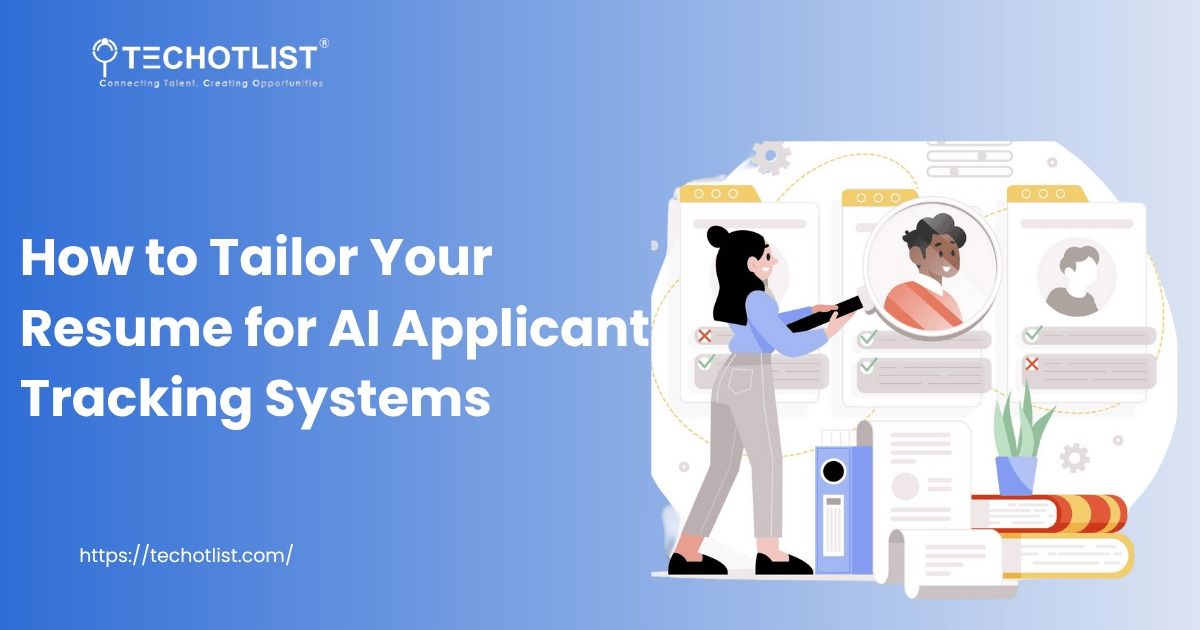
How AI Is Transforming Hiring in 2026: Trends, Tools & What Job Seekers Must Know
TL;DR:
AI is transforming hiring by automating resume screening, candidate matching, and interviews. Job seekers must optimize resumes, build skills, and adapt to AI-driven recruitment to stay competitive.
Hiring is no longer human-first, it’s AI-first.
In 2026, most resumes are screened, ranked, and even shortlisted by AI before a recruiter ever sees them.
From intelligent ATS systems to AI interview agents, recruitment has become faster, data-driven, and highly automated.
This shift isn’t just changing how companies hire, it’s redefining what candidates must do to get hired.
In this guide, we break down how AI is transforming hiring, the latest trends, and what job seekers must do to stay competitive.
What Is AI in Hiring?
AI in hiring refers to the use of artificial intelligence to automate and enhance recruitment processes such as resume screening, candidate matching, interview scheduling, and hiring decisions.
It helps companies:
- Process thousands of applications instantly
- Identify the best-fit candidates using data
- Reduce manual effort and hiring time
The Rise of AI in Hiring: What’s Changing?
AI isn’t replacing recruiters, it’s making them faster and more efficient. But that speed can come at a cost if you’re not prepared.
Key Transformations in the Hiring Process:
Automated Resume Screening
Tools like Applicant Tracking Systems (ATS) and LLM-powered screeners can evaluate thousands of resumes in seconds, filtering out candidates who don’t meet keyword or formatting requirements.AI Interviewers and Assessments
Platforms now use AI-driven video interview assessments that analyze facial expressions, tone of voice, and word usage to score candidates.Predictive Hiring Models
AI models predict which applicants are more likely to succeed based on past hiring data, performance metrics, and behavioral analysis.Chatbots for Pre-Screening
Recruiter chatbots gather basic information and answer candidate questions, often acting as the first point of contact.
Real-World Example:
A Fortune 500 tech firm reduced time-to-hire by 40% after implementing an AI-powered screening system. But in doing so, they also saw a 20% drop in candidates from non-traditional backgrounds, showing how AI can inadvertently reinforce bias without careful oversight.
The Double-Edged Sword: Benefits vs. Bias
Advantages of AI in Hiring
Faster application processing
Reduced human error in early screening
Improved job-candidate matching through skill mapping
Risks and Biases
Candidates with unconventional resumes may be overlooked
Overreliance on keyword matching penalizes creativity
Biased training data can reinforce systemic hiring inequalities
Tip: Even in a high-tech pipeline, human recruiters still make the final call in most cases. Your goal is to optimize for both machine and human readers.
How to Stand Out in an AI-Driven Job Market
It’s no longer enough to have a polished resume, you need a smart resume, an authentic digital presence, and strategic positioning.
1. Optimize Your Resume for AI
Use standard job titles and industry-specific keywords
Avoid excessive graphics or columns (ATS can't parse them well)
Include measurable results (e.g., "Improved API response time by 40%")
2. Balance AI Optimization With Human Appeal
Use a compelling summary at the top that conveys who you are
Keep formatting simple but not robotic, show your personality in cover letters and interview prep
3. Strengthen Your Online Presence
Maintain an up-to-date and keyword-optimized LinkedIn profile
Engage with content in your niche (e.g., post about recent tech stack experiences)
Consider a personal portfolio website with GitHub or project links
4. Focus on Skills AI Can’t Evaluate (Yet)
Emotional intelligence, strategic thinking, and cross-team collaboration still matter, and will always need humans
Highlight these traits in real-world project stories during interviews
5. Ace AI-Powered Interviews
Practice with mock AI interview tools
Maintain neutral expressions, eye contact, and steady speech
Prepare STAR-based responses (Situation, Task, Action, Result)
Case Study: Beating the Bots
Candidate: Priya Murugesan, a backend developer transitioning to DevOps
Challenge: Getting past ATS filters for hybrid roles
Solution
Customized each resume using role-specific DevOps keywords (e.g., “CI/CD pipeline,” “infrastructure as code”)
Used bullet points with metrics:
“Reduced deployment time by 60% using Jenkins and Docker.”Created a blog showcasing DevOps tutorials on GitHub Pages
Result:
Priya received interview calls from three major firms, two of which previously ghosted her with a generic resume.
FAQ: Navigating AI-Driven Hiring
Q: How can I tell if a company uses AI in hiring?
A: Look for mentions of ATS platforms or AI assessments in the job description. If not explicit, assume they use some level of automation, especially in larger firms.
Q: Should I write different resumes for each job?
A: Yes. Tailor each application with job-specific keywords to match AI filters and reflect the language used in the job post.
Q: What if I’m from a non-traditional background?
A: Emphasize transferable skills and create content (blog, portfolio, GitHub) that demonstrates your capability beyond traditional credentials.
Conclusion: The Human Edge in an AI World
AI is transforming hiring, but not eliminating opportunity. In fact, it’s amplifying it for those who know how to adapt strategically. By aligning your personal brand, resume, and mindset with both the algorithms and the humans behind them, you’ll not only survive the AI wave, you’ll ride it.
Related posts
Stop Hiding Your $150K Skill, How Prompt Engineering Can Boost Your Salary by $18K+
31 Dec 2025
AI Skills Fortune 500 Companies Are Hiring for in 2026
10 Apr 2026
AI in Software Testing: How to Catch 90% of Bugs Before Release
31 Dec 2025
High Paying AI Jobs in 2026: Why Product Managers Are Leading the Shift
01 Apr 2026
Why This AI Question Will Dominate 2025 Job Interviews (And How to Answer It)
12 Aug 2025