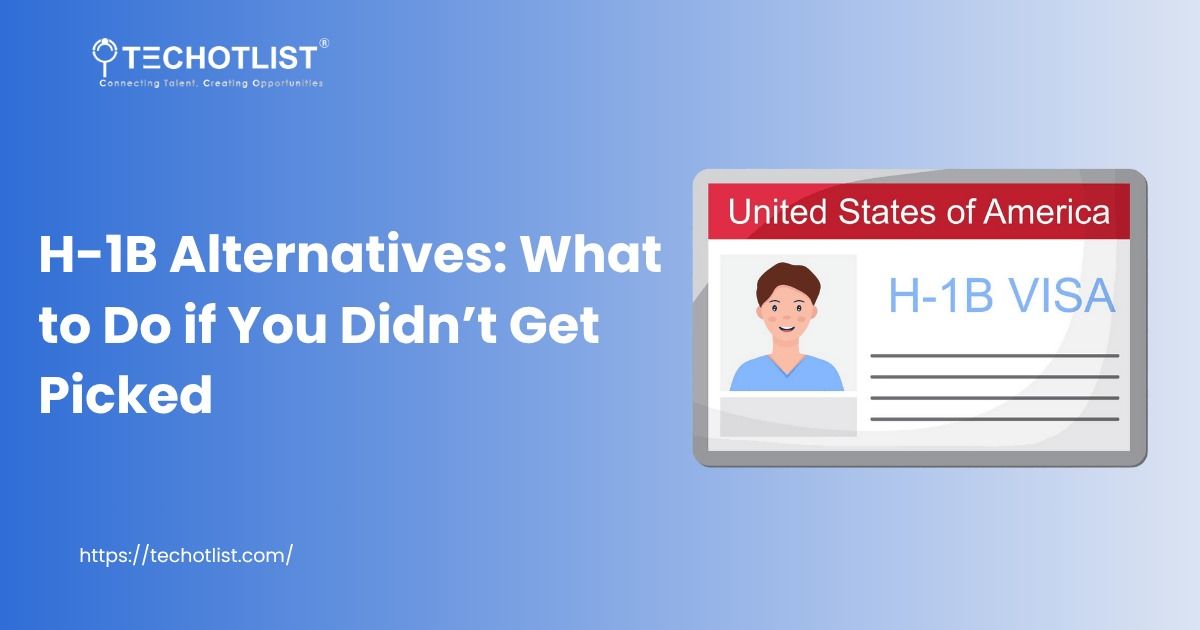
H-1B Visa Alternatives in 2026: What to Do If You’re Not Selected
Introduction: Missed the H-1B? Your Career Doesn’t End Here
Every year, thousands of skilled professionals apply for the H-1B visa, hoping to build their careers in the United States. But with limited slots and high competition, many qualified candidates are not selected.
If you didn’t get picked in the H-1B lottery in 2026, it’s not the end of your journey. In fact, it can be the start of a more strategic and flexible career path.
There are several H-1B visa alternatives in 2026 that allow you to continue working, growing, and even returning stronger to the U.S. job market.
TLDR: What to Do If You Didn’t Get H-1B in 2026
- Use STEM OPT extension if eligible
- Apply for cap-exempt H-1B roles
- Build profile for O-1 visa
- Explore L-1 through multinational companies
- Consider Canada or remote work options
Why Missing the H-1B Lottery Is Not the End
The H-1B visa is highly competitive. With hundreds of thousands of applicants and limited approvals, rejection is common.
However, the global tech industry is expanding beyond borders. Many professionals are now building successful careers through alternative visa routes, remote work, or international relocation.
Instead of seeing it as a failure, treat it as an opportunity to explore smarter and more stable career paths.
Best H-1B Visa Alternatives in 2026
STEM OPT Extension (For F-1 Students)
If you are on an F-1 visa with a STEM degree, you can apply for a 24-month extension.
This allows you to:
- Continue working in the U.S.
- Reapply for H-1B in future cycles
- Gain more experience without immediate sponsorship
It is one of the easiest and most practical options for students.
Cap-Exempt H-1B Jobs
Some employers are not subject to the H-1B lottery.
These include:
- Universities
- Non-profit organizations
- Research institutions
These roles allow you to work in the U.S. without going through the lottery process.
Many professionals use this route to enter the system and later transition into private companies.
O-1 Visa (Extraordinary Ability)
The O-1 visa is for individuals with strong achievements in their field.
You may qualify if you have:
- Published research or articles
- Strong GitHub or open-source contributions
- Awards or recognition
- Industry recommendations
This visa is becoming more popular among AI engineers, developers, and tech founders in 2026.
L-1 Visa (Company Transfer Option)
If you work for a company with offices in multiple countries, you can transfer to the U.S. after working abroad for at least one year.
This option is ideal if:
- You are already employed in a multinational company
- You have specialized skills or leadership roles
It is a strong alternative for long-term career growth.
Canada or Other Countries as a Backup Plan
Countries like Canada offer easier immigration pathways and strong tech ecosystems.
Moving to Canada allows you to:
- Work in a growing tech market
- Gain international experience
- Reapply for U.S. visas later
Many professionals use this as a strategic stepping stone.
Remote Work for U.S. Companies
Remote work has become a powerful alternative.
You can:
- Work for U.S.-based companies from your home country
- Build experience with global teams
- Stay connected to the U.S. job market
This keeps your career moving forward while you explore future visa options.
Other Options to Consider
There are additional paths depending on your situation.
If you previously held an H-1B, you may be eligible for a transfer. Some professionals explore investment-based visas or startup visa programs in other countries.
Having multiple options increases your chances of success.
How to Build a Strong Backup Strategy
If you didn’t get selected in the H-1B lottery, the key is to act quickly and strategically.
Focus on:
- Improving your technical skills
- Building real-world projects
- Expanding your professional network
- Targeting companies open to international talent
Instead of relying on one path, explore multiple options at the same time.
FAQs: H-1B Alternatives 2026
Can I apply for H-1B again next year?
Yes, you can reapply as long as you maintain valid status.
Is O-1 visa better than H-1B?
It depends. O-1 is merit-based and may offer more flexibility if you qualify.
Can I work remotely for U.S. companies without H-1B?
Yes, many companies hire remote talent globally.
Which is the easiest alternative?
For students, STEM OPT is usually the easiest option.
Conclusion: Your Career Is Bigger Than One Visa
Not getting selected for the H-1B visa in 2026 can feel disappointing, but it does not define your future.
There are multiple ways to build a successful tech career, both in the U.S. and globally. Whether it’s through OPT, O-1, remote work, or international opportunities, your growth depends on how you adapt.
Stay focused, stay skilled, and stay proactive. The opportunities are still there—you just need to take a different path.
Related posts
Remote Work Visas for Tech Professionals (2026): Best Countries Hiring Globally
22 Apr 2026
OPT & CPT Jobs 2026: How to Find Tech Jobs with H-1B Sponsorship
21 Jul 2025
How OPT & CPT Students Can Get H-1B Sponsorship Tech Jobs in 2026
22 Apr 2026
Canada vs USA vs UK: Best Country for Tech Jobs in 2026
21 Jul 2025