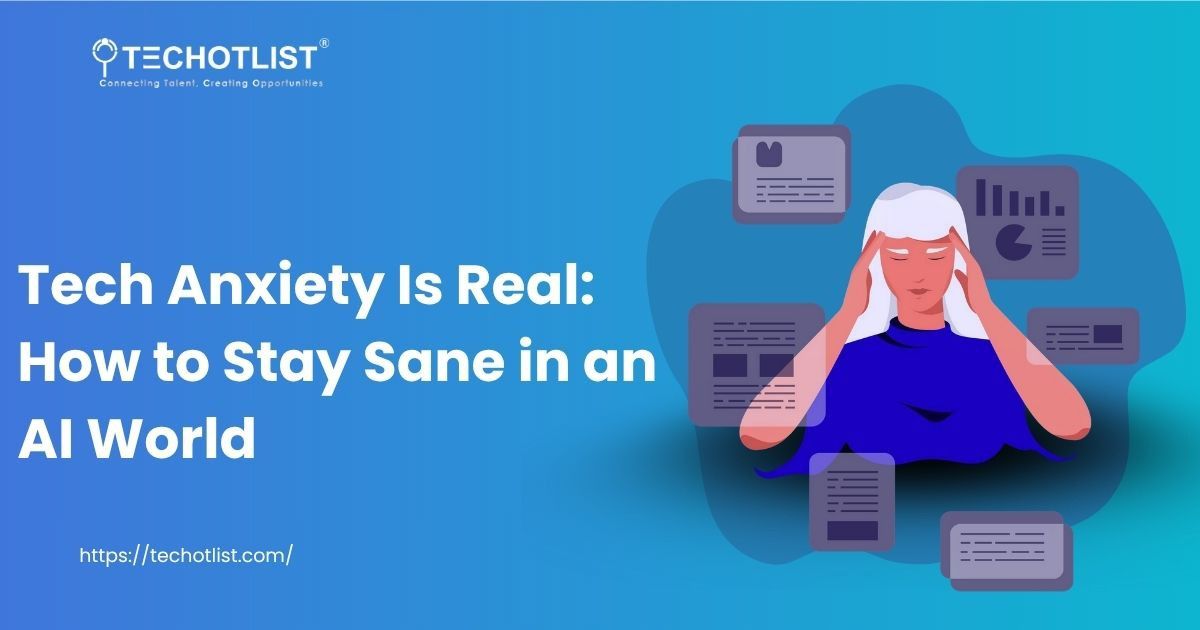
Tech Anxiety in 2026: Navigating the AI Shift, Sustainable Upskilling, and Mental Resilience
Artificial Intelligence (AI) is no longer a futuristic buzzword. It’s shaping industries, redefining job roles, and influencing decision-making at every level. While AI promises efficiency, personalization, and innovation, it also introduces a pressing challenge: Tech Anxiety.
From software developers and data analysts to marketing professionals and recruiters, many in the workforce are asking: Will AI replace my job? How do I stay relevant? What skills matter now?
This article tackles the psychological weight of living in an AI-dominated landscape and offers practical strategies to manage anxiety, adapt to technological change, and future-proof your career in 2026.
Understanding Tech Anxiety in the Age of AI
Tech anxiety refers to the growing unease professionals feel about their place in a world rapidly transformed by automation and artificial intelligence. It isn’t just a fear of obsolescence, it’s the psychological strain caused by the pace of change, fear of being left behind, and the ambiguity around future career paths.
While the fear is real, the data suggests that AI is transforming roles rather than erasing them entirely."
Why It’s Growing:
• Job displacement fear due to AI and automation
• Information overload from non-stop updates and new tools
• Pressure to upskill continuously
• Lack of clarity about where to focus career efforts
Real-World Case: The 2026 Developer Pivot
Consider a backend developer managing APIs for years. With the rise of Agentic AI and autonomous coding tools, junior developers are now achieving in hours what used to take days.
Panic often sets in when veterans question the value of their deep technical experience.
Instead of resisting, successful professionals are pivoting. They are moving toward AI-Orchestration, model deployment, and AI ethics frameworks—domains where human oversight is critical.
AI didn’t eliminate the role; it reshaped it. Staying ahead means aligning human strengths with emerging tech trends.
5 Proven Ways to Manage Tech Anxiety and Thrive
1. Reframe Your Mindset: AI as an Assistant, Not a Threat
AI tools, from LLMs to predictive analytics, augment productivity. When used wisely, they reduce mundane tasks and free up mental bandwidth for higher-value, human-centric work like strategy, creativity, and leadership.
Tech anxiety often manifests as imposter syndrome, especially for senior engineers navigating the high-speed reality of 2026.
Action Tip:
Start viewing AI as a collaborative tool. Ask: “How can I delegate repetitive work to AI and focus on what only I can do?”
2. Focus on Irreplaceable Human Skills
Jobs that blend technical expertise with soft skills are the most resilient.
Top Human-Centric Skills to Cultivate:
• Emotional intelligence (EQ) and empathy
• Ethical judgment and strategic thinking
• Complex decision-making and innovation
These competencies aren't easily replicated by machines and are increasingly in demand.
3. Curate, Don’t Consume
AI news can trigger "doomscrolling." Not every update is relevant. Overconsumption leads to confusion and burnout.
Action Tip:
Follow 1–2 expert newsletters. Allocate a fixed weekly time slot to explore new tools rather than chasing every daily update.
4. Redesign Your Career Around the AI Megatrend
Instead of resisting change, lean into it. Future-ready professionals align their roles with AI’s direction, either by integrating it into their workflow or moving into adjacent, AI-resilient domains.
Career Transition Examples:
Traditional Role → AI-Enhanced Career Path
• Backend Developer → AI Integration Engineer
• QA Tester → Test Automation Specialist
• Recruiter → AI Talent Strategist
• Technical Writer → Prompt Engineer or LLM Trainer
• Data Analyst → ML Ops or AI Insight Analyst
5. Build a Learning Stack That’s Sustainable
The antidote to tech anxiety is upskilling with intent, not panic.
• T-shaped Learning: Deep expertise in one area, broad knowledge in adjacent AI skills
• Project-based learning: Build something useful with every new concept you learn
Addressing Common Concerns (FAQ)
Q1: Will AI eliminate most tech jobs?
No. AI will transform more jobs than it eliminates. Roles will evolve, and new opportunities will emerge, especially where human-AI collaboration is key.
Q2: I’m not in AI or data science. Should I worry?
You don’t need to be an expert. Focus on how AI affects your specific industry. For example, marketing teams use AI for personalization, while managers use it for smarter planning.
Q3: How can I keep up without burning out?
Adopt a "just-in-time" learning approach. Learn only what solves your current problem or aligns with your next career milestone. Not everything needs to be mastered today.
Conclusion: The Calm in the Code
Tech anxiety is real, but it doesn’t have to paralyze you. The most successful professionals in 2026 aren’t those who ignore AI, but those who adapt intentionally.
Focus on the areas where machines fall short: ethics, empathy, and innovation.
At Techotlist, we support your career journey with AI-aware job listings and upskilling tracks tailored for the modern workforce.
Explore AI-resilient jobs and career guides at Techotlist.com.
Related posts

Mobile Development Career Paths in the U.S.: iOS vs Android vs Cross-Platform
16 Jul 2025

The Role of UI/UX in U.S. Product Teams: Design Thinking, Jobs, and Visa-Focused Portfolios
10 Jul 2025
AI vs Cybersecurity in 2025: Which Career Path Pays More?
15 Jul 2025
Tech Burnout 2025: Digital Overload Is Crushing Developers & Engineers
15 Jul 2025

Imposter Syndrome in Senior Engineers: Navigating the Hidden Reality of 2026 Tech
03 Apr 2026